


Table of Contents
Water makes up an astounding 80-90% of a living plant’s weight. Plant nutrients are vital alongside water to keep our gardens thriving. Plants require 17 different essential elements that help them grow, maintain their functions, and reproduce successfully.
My years of gardening experience have taught me that plant nutrition goes beyond simply adding fertilizer to soil. These nutrients serve unique purposes in plant health. Nitrogen constitutes almost half of a plant’s dry matter, while phosphorus drives energy transfer and potassium improves fruit flavor. Each nutrient shortage manifests differently in plants, making early recognition of these signs significant.
This piece covers everything about essential plant nutrients. You’ll learn to identify common deficiencies and discover the best methods to maintain healthy, productive plants.
Understanding Plant Nutrients Basics
Plants are amazing organisms that grow through a complex network of nutrient absorption and use. Air and water provide three vital elements – carbon, oxygen, and hydrogen – which make up about 95% of a plant’s dry weight. In spite of that, plants need 13 more essential elements from the soil to finish their growth cycle.
What plants need to grow
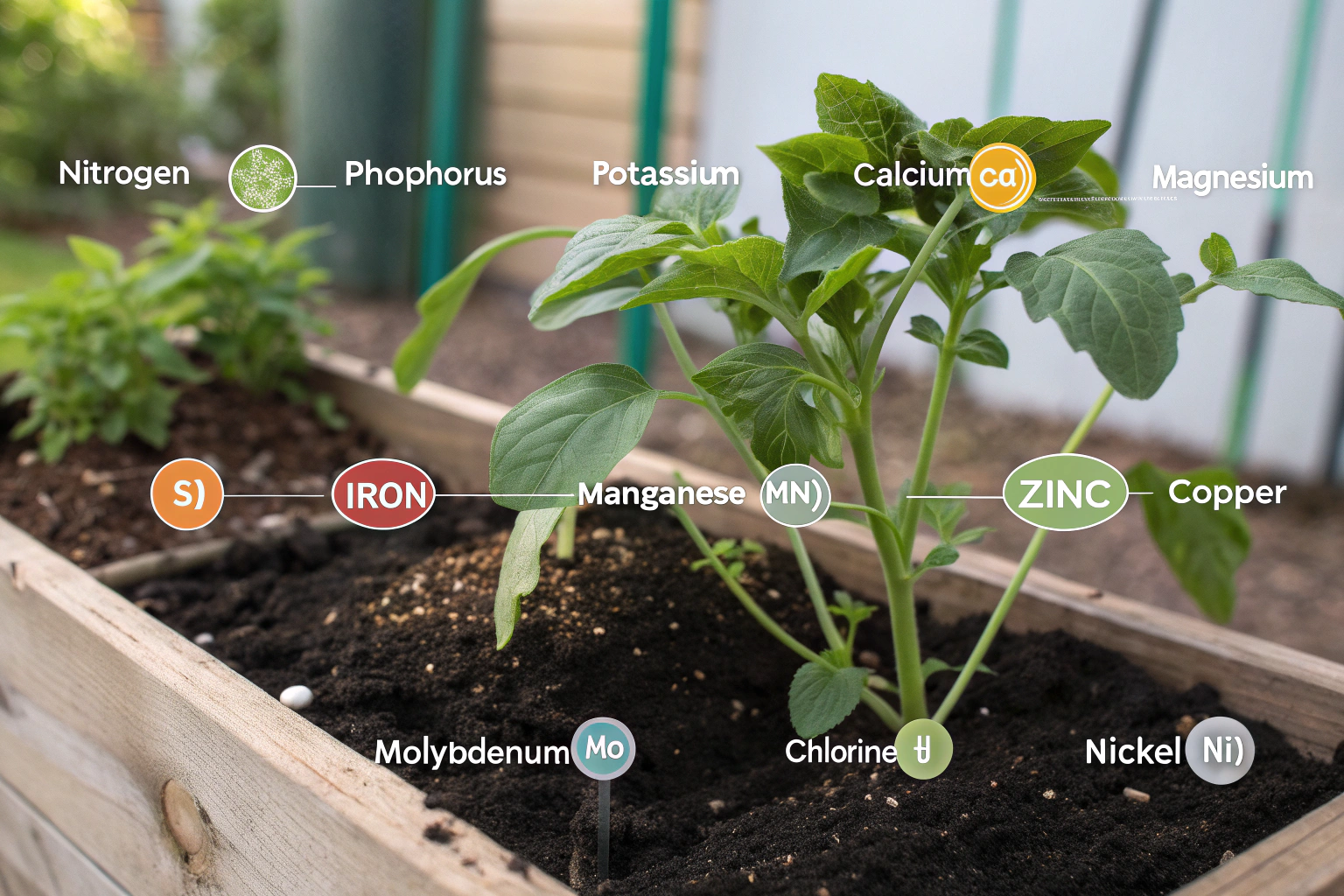
Plants need 16 chemical elements to grow well. These elements fall into two main groups: macronutrients and micronutrients. Nitrogen, phosphorus, and potassium (NPK) are the main macronutrients. This is a big deal as it means that vegetable crops need more than 100 pounds per acre yearly. Calcium, magnesium, and sulfur are secondary macronutrients.
Plants need smaller amounts of micronutrients, but these play vital roles in their development. Here’s what they do:
- Iron – helps make chlorophyll
- Zinc – helps form chlorophyll
- Copper – works as an enzyme component
- Manganese – turns on enzymes that make chlorophyll
- Boron – helps build cell walls
- Molybdenum – converts nitrogen into forms plants can use
- Chlorine – keeps ionic balance steady
How plants absorb nutrients
Plants absorb nutrients in two main steps. Nutrients must first move from soil to the root surface. Then these nutrients cross from outside to inside the plant roots.
Plant roots take in nutrients through several ways. You might be surprised to learn that roots don’t actively look for nutrients. They wait for nutrients to come to them through three main processes:
- Mass Flow: This process moves 98% of nutrients to roots. When plants release water from their leaves, they create suction that pulls nutrient-rich soil solution toward the roots.
- Diffusion: This slower process moves phosphate, potassium, and zinc ions. Think of people leaving a concert – nutrients move from crowded areas to less crowded ones.
- Root Interception: Roots touch only 1-2% of the total soil surface, but they can take in nutrients directly through this small contact.
The role of soil in plant nutrition
Soil does more than just hold plants in place. It’s a living ecosystem that serves five major functions. For plant nutrition, soil gives structural stability and controls how water and nutrients are held and released.
The best soil has 50% pore space and 50% solids. Air and water split the pore space equally. The solid part usually has 45% mineral matter and 5% organic matter, though these numbers can change a lot between different soil types.
Soil texture affects how many nutrients plants can get. Clay particles are tiny but excellent at holding water and nutrients because they have so much surface area. Organic matter in soil also helps by:
- Giving plants essential nutrients
- Shaping soil structure
- Controlling soil pH
- Making water retention and air flow better
Soil pH changes how easily plants can get nutrients. When pH is low, plants struggle to get macronutrients, while some micronutrients become too available and might harm plants. Organic matter and clay minerals help keep soil pH steady for better plant growth.
Secondary nutrients
Garden soils usually have enough nutrients for plants to grow. But our gardening breaks the natural nutrient cycle because we don’t let plants decay back into the soil. We need to add organic matter and fertilizers to replace these lost nutrients.
Essential Nutrients for Plant Growth
Plants need about 17 nutrients to grow and function properly. These nutrients create a beautiful symphony of chemical processes that shape everything from a plant’s leaf color to its fruit production.
Primary macronutrients (NPK)
Nitrogen (N), Phosphorus (P), and Potassium (K) – known as the “Big Three” nutrients – are the life-blood of plant nutrition. Vegetable crops need these elements in large amounts, often more than 100 pounds per acre each year.
Nitrogen is the building block of amino acids, proteins, and chlorophyll. This architect of green, leafy growth makes up about 50% of a plant’s dry matter. Plants show these signs when nitrogen runs low:
- Stunted growth
- Pale or yellowing leaves
- Reduced yields
Phosphorus acts as the plant’s energy currency and controls these vital processes:
- Root development
- Flower and fruit production
- Photosynthesis
- Cellular respiration
Potassium is a vital part of plant health, even though we talk about it less. It controls water uptake, boosts disease resistance, and triggers various enzymes. More than that, it improves fruit quality and helps plants handle environmental stress.
Calcium, magnesium, and sulfur are just as important as primary nutrients for plant growth. These nutrients control major functions like chlorophyll formation and protein synthesis.
Magnesium has 6.7% of each chlorophyll molecule. Beyond photosynthesis, it carries phosphorus and affects soil pH levels. Plants need extra magnesium when soil tests show less than 25 to 50 parts per million.
Calcium does much more than most people think:
- Gets roots and leaves growing
- Creates compounds that build cell walls
- Helps plants absorb other nutrients
- Cuts down aluminum and manganese toxicity in soil
Sulfur rounds out the secondary nutrients and is vital for protein formation. You’ll find it in three key amino acids: methionine, cysteine, and cystine.
Micronutrients and their importance
Micronutrients are just as vital for plant survival, even though plants need smaller amounts. These include iron, boron, copper, chlorine, manganese, molybdenum, zinc, cobalt, and nickel.
Iron stands out because it helps make chlorophyll. Plants take in iron as the ferrous (Fe²⁺) cation and use it in enzyme systems that handle energy transfer and nitrogen fixation.
Zinc was the first element scientists recognized as essential for plants. Even though plants need tiny amounts, not having enough zinc often limits crop yields. Manganese kicks off several key metabolic reactions and helps with photosynthesis.
Copper and boron each play unique roles:
- Copper starts up growth enzymes and helps make proteins correctly
- Boron keeps membranes stable and maintains plant cell structure
Molybdenum might be needed in trace amounts, but it’s vital for nitrogen fixation in legume root nodules. Chlorine, often forgotten, helps with energy reactions and controls plant water balance.
Signs of Nutrient Problems in Plants
You need a keen eye and deep understanding of visual signs to spot nutrient problems in plants. My experience as a master gardener shows that diagnosing nutrient deficiencies needs a step-by-step approach because many symptoms look alike.
Leaf color changes
Leaf coloration gives away the most obvious signs of nutrient problems. Plants show chlorosis when leaves lose their natural green color, which points to nutrition issues. My years of experience show that where and how the discoloration appears tells us exactly what’s missing.
When nitrogen runs low, older leaves turn yellow uniformly. This starts at the tips and works its way in along the midrib. Plants lacking phosphorus show a unique dark to bluish-green color, and sometimes their stems and leaves get purple tints.
Yellow patches between leaf veins create another common pattern:
- Older leaves show yellow patches between veins when magnesium runs low
- Young leaves develop yellow areas between green veins first when iron is missing
- Manganese shortage creates a checkered look, followed by scattered dead spots
Plants show a unique pattern when potassium runs short. Yellow spots first appear along leaf edges and move toward the center. These spots can die off in severe cases, but the midrib stays green.
Growth issues
Nutrient shortages don’t just change leaf color – they shake up the whole plant’s growth. Research shows these growth problems follow specific patterns.
Plants that need calcium show these signs:
Boron shortage creates unique problems in growing tissue. Plants typically show:
- Root tips stop growing
- Leaves form oddly
- Growing points die
- Roots develop poorly
Young plants struggle the most when phosphorus runs low. They mature late and grow weak and spindly. A zinc shortage makes stems shorter and leaves smaller, giving plants their signature “little leaf” look.
- Seeds don’t form
- Inside tissues break down
- Top buds die
“Hidden hunger” ranks among the most worrying nutrient issues – plants can run low on nutrients without showing clear signs. Crop yields often drop before we see any visual clues.
Root problems often signal nutrient imbalances. Plants that need copper grow slowly and mature late. When molybdenum runs low, older leaves cup and thicken, and yellow patches appear between veins.
Getting the diagnosis right means looking at several factors, since stress or pests can look like nutrient problems. Here’s my systematic approach to identify issues:
- Look at the whole plant
- Check soil conditions
- Think about environmental factors
- Look at recent fertilizer use
- Test plant nutrients if needed
These visual clues help maintain healthy plant growth. Remember that visible symptoms mean plants already face stress. Regular checks and smart nutrient management make all the difference in keeping plants healthy.
How to Feed Your Plants Right
Plants need proper feeding based on scientific understanding rather than guesswork. Your crop yield depends heavily on soil fertility – up to 60% in fact. The right plant nutrition strategy makes the difference between thriving and struggling plants.
Soil testing basics
Your garden’s soil test works like a health report card. It shows vital information about nutrient levels and pH balance. This simple step helps you avoid nutrient deficiencies and too much fertilization. Regular testing lets you:
- Track changes in soil fertility over time
- Identify specific nutrient shortages
- Make better decisions about fertilizer selection
- Protect the environment from over-fertilization
The best results come from soil samples taken from the top six inches, where most nutrient-absorbing roots grow. Your garden should be divided into management units based on different crops or planting dates. Each area needs separate sampling. A good sample includes about 20 subsamples from each unit. Mix these really well and submit about a half-pint to test.
Choosing the right fertilizer
The NPK ratio on product labels is your starting point for selecting fertilizers. These three numbers show the percentage by weight of nitrogen, phosphorus, and potassium. Take a 100-pound bag of 5-7-4 fertilizer:
- 5 pounds is nitrogen
- 7 pounds is phosphate
- 4 pounds is potash
- 84 pounds consists of filler material
Most garden soils have enough nutrients for simple plant growth. Some situations just need extra feeding:
- Seedlings and cuttings in early growth stages
- Container plants
- Fruit and vegetables unless using no-dig methods
- Plants with nutrient deficiency symptoms
Your fertilizer options include both organic and synthetic types. Organic fertilizers usually have lower NPK ratios but are a great way to get slow-release nutrients that become available gradually. Synthetic fertilizers work faster but you’ll need more precise application.
When to fertilize
The right timing makes fertilizer applications work better. Plants just need nutrients during active growth phases. Most plants follow this pattern:
- Early spring application as growth begins
- Regular feeding through growing season (April to September)
- Less or no feeding during winter dormancy
Container plants need more frequent feeding than garden plants. Start fertilizing six weeks after potting and increase as growth picks up. Heavy feeders or fast-growing container plants might just need feeding twice weekly during peak growth.
Your soil type affects fertilization timing. Sandy or chalky soils that drain quickly might just need more frequent applications. Organic mulches work well as alternatives. They improve soil structure, keep moisture in, and release nutrients slowly.
Note that wrong timing of fertilizer can cause issues. Late-season feeding might trigger tender new growth that cold can damage. Plants under stress, especially from drought or root damage, should recover before feeding resumes.
The best results come from matching fertilizer types with timing:
- Use slow-release organic fertilizers in late winter or early spring
- Apply liquid fertilizers throughout main growing season
- Mix controlled-release fertilizers into container soil mixes
Common Nutrient Deficiencies and Solutions
Gardens need proper nutrients to thrive, even with the best care. My years working with plants have taught me that quick identification of nutrient problems and their fixes can bring your plants back to health fast.
Nitrogen deficiency fixes
Plants start showing nitrogen deficiency 4-6 weeks after planting, and older leaves are the first to show signs. You’ll notice these signs in plants that lack nitrogen:
- Pale yellowish-green coloration
- Spindly stalks
- Poor secondary shoot development
Here are some proven ways to fix nitrogen shortages:
- Well-rotted manure or organic matter as mulch releases nitrogen steadily
- High-nitrogen fertilizers like sulfate of ammonia give quick results
- Poultry manure pellets help boost nitrogen levels
Most nitrogen deficiencies pop up in spring when plants start growing actively. Winter rains wash away soil nitrogen. The timing of your nitrogen applications is vital to prevent these issues.
Phosphorus problems
Plants lacking phosphorus show bronzish or purplish colors in the lower parts of mature foliage. Cold, wet, or very dry soils often cause these problems. Look for these signs:
- Growth slows down
- Foliage turns dull yellow
- Plants mature late
The first signs of potassium deficiency show up as yellowing and dying tissue along leaf margins of older leaves. This nutrient kicks off more than 60 plant enzymes and controls key functions like photosynthesis.
Phosphorus deficiency hurts root development by a lot, which means plants can’t absorb other nutrients well. Here’s how to fix phosphorus deficiencies:
- Bone meal works great for organic gardens
- Superphosphate suits conventional settings
- Phosphoric acid might help in severe cases
Potassium issues
Plants that need potassium badly will show:
- Leaf edges turn yellow from outside in
- V-shaped discoloration patterns
- Weak stalks that fall over late in the season
You’ll often see potassium deficiency in:
- Sandy or chalky soils
- Places with lots of rain
- Fields with low-nitrogen leftover
These high-potassium fertilizers can fix the problem:
- Sulfate of potash
- Tomato feed
- Organic materials from sugar beet processing
Plants with enough potassium handle stress better, including drought, salt, and flooding. Studies show plants getting extra potassium yielded 42% more when fighting fungal diseases. Good potassium levels also helped plants survive drought by managing water better and keeping cell membranes stable.
Soil moisture plays a big role in nutrient availability. Plants struggle to take up nutrients, especially potassium, when soil is too wet or dry. The right soil pH is also key since extreme levels can lock up nutrients that are already there.
Natural Ways to Boost Plant Nutrition
Natural plant nutrition starts with the connection between healthy soil and plant growth. Research shows organic additions improve soil fertility, structure, and water retention by a lot.
Composting basics
Experienced gardeners call compost “black gold” because it contains three main nutrients that garden crops need. This nutrient-packed material changes soil makeup and creates perfect growing conditions where:
- Nutrients release slowly over months or years
- Soil holds fertilizers better
- Tiny air channels work like a sponge to hold nutrients
Good compost needs the right mix of green materials (rich in nitrogen) and brown materials (rich in carbon). Fresh vegetable scraps, coffee grounds, and banana peels give plants quick nutrients. Coffee grounds are packed with nitrogen, while banana peels provide potassium and phosphorus.
Cover crops
Nature uses cover crops to keep soil fertile. These special plants help cycle nutrients in several ways. Plants with deep roots pull nutrients from lower soil layers that end up feeding later crops.
Studies show cover crops planted in late summer and fall can store between 30-120 kg of nitrogen per hectare before spring arrives. Different cover crops offer unique benefits:
- Lupins and buckwheat help phosphate move better through root secretions
- Cruciferous crops keep sulfur from washing away in sandy soils
- Chicory stores large amounts of boron, manganese, molybdenum and zinc
The most exciting research shows cover crops support helpful soil microorganisms. These tiny allies improve nutrient availability and plant health. Soil bacteria respond better to organic additions than mineral nitrogen.
Organic amendments
Organic additions reshape the scene for soil microbial communities that boost plant fitness and health. These natural materials work in multiple ways:
They improve soil structure to create the best conditions for root growth. The additions also make soil chemistry better, so plants can access nutrients easily. They encourage diverse microbe populations that help plants thrive.
Research reveals mixing organic additions with mineral fertilizers creates impressive results. To name just one example, replacing some chemical fertilizer with organic fertilizer improves soil quality while keeping bacterial diversity intact. This balanced method works especially well to:
- Boost soil enzyme activities
- Increase crop yields
- Keep beneficial soil microbes healthy
Biochar, a special organic addition, shows great potential to improve plant resistance to fungal diseases by changing the rhizosphere microbiome. Biogas slurry also helps soil bacterial communities, which leads to better soil health and plant growth.
New studies show how organic additions with different carbon-to-nitrogen ratios affect soil bacteria in unique ways. Wheat straw, which has high carbon content, increases microbial biomass nitrogen and soil respiration by a lot. Grass clover silage helps nitrogen transformation processes more effectively.
Conclusion
My approach to gardening has changed as I’ve learned more about plant nutrition. Plants need 17 essential elements to thrive, but you don’t need to be a chemistry expert to keep nutrient levels balanced. Your success depends on watching your plants carefully, testing soil regularly, and taking action quickly when you spot problems.
Experience has taught me that preventing problems works better than fixing them later. Soil tests act like an early warning system. Natural techniques such as composting and cover crops help create healthier soil. You can catch problems early by learning to spot nutrient deficiency symptoms before they affect your plants severely.
Most gardens already have enough nutrients for simple plant growth. Our gardening methods can disrupt the natural nutrient cycle. A balanced strategy works best – one that combines organic amendments with targeted fertilizers as needed. This method supports your plants right now and keeps your soil healthy for years to come.
Note that thriving plants need healthy soil. Rich, living soil filled with organic matter and beneficial microorganisms lets plants grow naturally strong. Nature has spent millions of years perfecting plant nutrition systems. We just need to support these natural processes and avoid mistakes that lead to deficiencies.


[5223]no1jili: The Top Philippines Casino & Slot Hub. Easy no1jili login, fast register, and official app download for the ultimate gaming experience. Join no1jili, the premier Philippines casino & slot hub. Experience easy no1jili login, fast register, and official no1jili app download for top gaming today! visit: no1jili
Just tried out umcassino1 and, not gonna lie, I was impressed. The graphics were slick, and the gameplay was smooth. Definitely worth a spin if you’re searching for a fresh spot to play. Here’s the link: umcassino1.
P9betbr, okay, I see you! Pretty solid interface and the odds seem competitive. If you’re searching for a reliable betting platform, this could be it. Definitely worth exploring if you’re in Brazil. Visit p9betbr to get started.
Trying to get into bet19login? Registration was pretty smooth for me. Check out bet19login
Yo, 84win219! Heard some whispers. Anyone actually using this? Let me know if it’s legit, ya know? Thinking about throwing some shekels their way. 84win219
Casino Plus download? You know I’m all in! Easy to grab the APK. Hope the RNG gods will be kind today. Fingers crossed! casino plus download
Fortune Gems 2 download is a MUST if you’re into those gem-themed slots. Graphics are lit, and the bonus games be hitting. Give it a whirl! fortune gems 2 download
555phcasino, okay, it’s alright. Not amazing, but not terrible either. Got a decent selection and the interface ain’t clunky. Give it a shot: 555phcasino
1cassino, baby! This place is my new jam. Good vibes, decent payouts, and the live dealer games are FIRE. Definitely worth a shot. Your lucky start is right here, 1cassino
KTO’s not bad! Sports betting is on point, and they have a casino section too. I’ve had some okay wins here and there. Worth a look if you’re into both. Find the best odds at kto
Alright, bajibetapp’s calling my name. Heard they’ve got a decent mobile setup. Anyone had any wins on mobile? Spill the beans! I am going to play on bajibetapp!
Hey, heard about 49jilli? Gonna check it out and see what all the fuss is about! Looks promising. Thinking of signing up soon. 49jilli
VVwin, pretty standard online gaming site. I’ve had some lucky streaks there. Their site: vvwin
3388betcassino has a good selection of table games. Found myself enjoying some rounds of poker. Visit their site here: 3388betcassino
Came in tired from a long day and the writing held my attention anyway, and a stop at thisdomainisabdu kept that going, content that can engage a fatigued reader is doing something right because most online reading happens in suboptimal conditions like that one and quality content adapts to it without complaint.
However selective I am about new bookmarks this one made it past my filter, and a look at tasseltract confirmed the bookmark was worth the slot, the precious slots in my permanent bookmark folder are difficult to earn and this site earned one without making me think twice about whether the slot was justified by the quality.
A piece that read as the work of someone who reads carefully themselves, and a look at stridertorch continued that informed feel, writers who are also serious readers produce work with a different quality and this site reads as the product of someone steeped in good writing rather than just generating content for an audience.
Decided not to comment because the post said what needed saying, and a stop at siskatrance continued that complete feel, content that does not invite obvious additions or corrections from readers is content that has been carefully considered and this site appears to consistently produce pieces that satisfy rather than provoke unnecessary follow ups.
A piece that handled the topic with appropriate weight without becoming portentous, and a look at tweedvolume continued that calibrated seriousness, content that takes itself seriously without becoming pompous is something this site has clearly figured out and the balance shows up in every piece I have read across multiple sessions now.
Honest reaction is that I want to send this to a friend who would benefit from it, and a look at vesseltame added more material I will pass along too, the impulse to share is the strongest signal I have for content quality and this site is generating that impulse cleanly across multiple posts.
Worth recognising that the post handled a familiar topic without reaching for any of the obvious hot takes, and a stop at singersorbet continued that fresh treatment, sites that find new angles on subjects others have exhausted are sites worth following carefully and this one has clearly developed that exploratory instinct through patient practice.
Just sat back at the end of the post and felt grateful that someone took the time to write it, and a look at swansignal extended that gratitude across more of the site, recognising effort behind quality work is part of what makes the open web a community rather than just a marketplace today.
Worth bookmarking and sharing with anyone interested in the topic, that is my honest take, and a stop at waferturtle reinforces that, the kind of generous resource that makes the open web feel worth defending against the constant pressure to retreat into walled gardens and curated feeds today everywhere I look across all my devices.
Skipped past the first paragraph thinking it was setup and had to come back when the rest referenced it, and a stop at starlitvixen similarly rewarded careful reading from the start, content where every paragraph carries weight is content I now know to read from the beginning rather than skipping ahead.
Now noticing how rare it is to find a site that does not feel rushed, and a look at trenchtwist extended that calm pace, content produced without time pressure has a different quality than content shipped to meet a deadline and this site reads as written without urgency which produces a different and better experience for readers.
Reading this as part of my evening winding down routine fit perfectly, and a stop at slackvista extended the wind down nicely, content that calms rather than agitates is what I want at the end of the day and this site provides that calming reading experience reliably which is increasingly rare across the modern web.
Reading this with a fresh mind in the morning brought out details I might have missed in the afternoon, and a stop at tapetoken earned the same fresh attention, content that rewards being read at full attention rather than at energy lows is content with real density and this site has that density consistently.
Took a few notes from this post, the points are easy to remember without needing to come back and check, and a look at straitsurge added a couple more, the kind of place that sticks in the memory long after the browser tab has been closed for the day which says a lot really.
Decided after reading this that I would check this site weekly going forward, and a stop at tritonstyle reinforced that commitment, deciding to add a site to a regular rotation requires meeting a quality bar that very few places clear and this one cleared it cleanly without any noticeable effort or marketing push behind it.
Picked up two new ideas that I expect will come up in conversations this week, and a look at sampleshadow added another, content that arms me with talking points rather than just filling time is the kind that provides ongoing value beyond the moment of reading and this site is generating that kind of ongoing value.
Reading this in a quiet hour and finding it suited the quiet, and a stop at syruptarot extended the quiet reading mood, content that matches its own optimal reading conditions rather than fighting them is content that has been thoughtfully calibrated and this site reads as having a particular reading mood in mind throughout.
Genuine reaction is that I will probably think about this on and off for a few days, and a look at uptonshade added fuel to that, the best content lingers in your head after you close the tab rather than evaporating immediately and this site clearly knows how to write that kind of memorable content.
Appreciated the way each section connected smoothly to the next without abrupt jumps, and a stop at vincasinger kept that flow going nicely, transitions are something most blog writers ignore but the difference is huge for the reader who is trying to follow a sustained line of thought today across many different topics.
Really clear writing, the kind that makes you want to share the link with someone who has been asking about the topic, and a quick browse through singlevision only made me more sure of that, the information here stays useful long after the first read is done which says a lot.
However measured this site clears the bar I set for sites I take seriously, and a stop at brightwinner continued clearing that bar, the metrics I use for site quality are admittedly informal but they are consistent and this site has cleared them on multiple measurements across multiple visits which is meaningful for my evaluation.
Did not expect much when I clicked through but ended up reading the whole thing carefully, and a stop at cameranexus kept that engagement going, sometimes the unassuming sites turn out to deliver more than the flashy ones which is something I have learned to look out for over time online lately and across topics.
Will share this on a forum I am part of where it will be appreciated by others working in the same area, and a look at streamnexushub suggests there is more here worth passing along too, definitely a generous resource that deserves a wider audience than it probably has today across the open internet.
Honestly thank you to whoever wrote this because it scratched an itch I had not quite been able to articulate, and a stop at unifiednexus kept that satisfying feeling going, the kind of writing that meets unspoken needs is special and this site clearly has writers who understand their readers more than most do today.
Now planning a longer reading session for the archives, and a stop at brightamigo confirmed the archives are worth that longer commitment, sites with archives I want to read deliberately rather than just sample are rare and this one has clearly earned that level of interest based on the consistency of what I have already read.
Reading this prompted me to clean up some old notes related to the topic, and a stop at writerharbor extended that organising urge, content that triggers personal organisation rather than just consuming attention is content with motivating energy and this site has the kind of clarity that prompts active follow up rather than passive consumption.
Bookmark earned and the bookmark feels like a permanent addition rather than a maybe, and a look at deliverynexus confirmed that permanent status, the difference between durable bookmarks and ephemeral ones is something I have learned to feel quickly and this site triggered the durable feeling almost immediately during my first read here.
Worth saying this site reads better than most paid newsletters I have tried, and a stop at orientnexus confirmed that comparison, the bar for free content is often lower than for paid but this site clears the paid bar consistently and that says something about the editorial approach behind the work being published here regularly.
This one is staying open in a tab for the rest of the day so I can come back and re read certain parts, and a look at slippersixth suggests I will be doing the same with a few more pages here too, this is going to be a deep dive over the coming hours.
A piece that did not lecture even when it had clear positions, and a look at cameranexus maintained the same teaching without preaching tone, finding the line between informing and lecturing is hard and most sites land on the wrong side of it but this one has clearly figured out how to inform without becoming preachy.
Coming back tomorrow when I can give this a proper read, the post deserves better attention than I can give right now, and a look at singlevision suggests there is plenty more here that deserves the same treatment, definitely a site I will be exploring properly over the next few days when I can.
Just sat with this for a bit longer than I usually would because the points are worth thinking about, and after writerharbor I had even more to chew on, the kind of post that nudges your thinking forward without forcing the issue is something I have always appreciated in good writing online.
Stands apart from similar pages by actually being useful, that is high praise these days, and a look at gardenvertex kept that standard going, you can tell when a site is built around the reader versus around metrics and this one clearly belongs to the first category for sure based on what I read.
Great work on keeping things readable, the post never drags or repeats itself which I really appreciate, and a stop at streamnexushub added a bit more context that fit naturally with what was already said here, no need to read everything twice to get the point being made today.
Quietly the post solved something I had been turning over without quite knowing how to phrase the question, and a look at vectortimber extended that quiet solving, content that addresses unformulated needs is content with reader insight and this site has demonstrated that insight at a high rate across the pieces I have read recently.
During a reading session that included several other sources this one stood out, and a look at brightwinner continued the standout quality, the side by side comparison of sources during research is a useful exercise and this site has been winning those comparisons for me consistently across multiple research sessions during the last week.
Now noticing that the post benefited from being neither too short nor too long for its content, and a look at brightamigo continued that calibration of length, sites that match length to content rather than padding to hit some target are sites that respect both their material and their readers and this site does both.
Thanks for the honest framing without exaggerated claims that the topic will change my life, and a stop at orientnexus kept the same modest tone, restraint in marketing language signals trustworthiness and the writers here are clearly playing the long game by building credibility rather than chasing immediate clicks through hyperbole.
Thank you for not assuming the reader already knows everything, the explanations meet me where I am, and a look at unifiednexus did the same, that consideration is what makes a site feel welcoming rather than gatekeepy which is sadly the default mood across the modern web today for most subjects covered.
Solid little post, the kind that does not need to be flashy because the substance is doing the work, and a look at primevertexhub kept that quiet confidence going across the site, this is what writing looks like when the writer trusts the content to land on its own without theatrics or unnecessary attention seeking behaviour.
Closed the post with a small satisfied sigh, and a stop at urbanfamilia produced the same gentle exhale, content that ends well is content that respects the rhythm of reading and the writers here have clearly thought about how their pieces close rather than just trailing off when they run out of things to say.
Following the post through to the end without my attention drifting once, and a look at rapidnexus earned the same uninterrupted attention, content that holds attention without manipulating it is content with substantive pull and this site has demonstrated that substantive pull across multiple pieces in a single reading session reliably here today.
Appreciated that the writer trusted the reader to follow along without constant restating of earlier points, and a look at wisdomvertex continued that respect for the reader, treating an audience as capable adults rather than as people to be hand held through every paragraph is something I notice and value highly across the open internet today.
Worth flagging that the post handled an angle of the topic I had not seen elsewhere, and a look at masteryvertex extended that fresh treatment, content that finds underexplored corners of well covered subjects is genuinely valuable and this site has demonstrated that exploratory editorial approach across multiple pieces in my reading sessions today.
I really like how the writer keeps the tone friendly without sounding fake or overly polished, and after a stop at trumpetsixth the same calm pace was there, no rushing to make a point and no padding either, just clean honest writing that I can respect and come back to later again.
Now appreciating that the post did not require me to agree with the writer to find it valuable, and a look at moderncomfort maintained the same useful regardless of agreement quality, content that informs even when it does not convince is content with broader utility and this site reads as useful even when I disagree.
Bookmark added with a small note about why, and a look at growthvertexhub prompted another bookmark with another note, the bookmarks I annotate are the ones I expect to return to deliberately rather than stumble into and this site is generating annotated bookmarks at a higher rate than my usual content sources by some margin.
Closed the laptop after this and let the ideas settle for a few hours, and a stop at craftbreweryhub similarly rewarded reflective time, content that benefits from sitting with rather than racing past is the kind I want more of and the kind that this site appears to consistently produce week after week here.
Now recognising the specific pleasure of reading writing that shows real care for sentence shapes, and a look at royalmariner extended that craft pleasure, sentence level writing quality is something most blog content ignores entirely and this site has clearly invested in the prose layer alongside the substance which is rare today.
Decided to read more before commenting and the more I read the more I wanted to say something, and a stop at brightzenithhub pushed that impulse further, when content provokes the urge to participate rather than just consume it is doing something quite specific and worth recognising clearly when it happens during reading.
Now thinking the topic is more interesting than I had given it credit for, and a stop at growthcareer continued that elevated interest, content that revives my curiosity about subjects I had set aside is doing genuine work in the structure of my interests and this site is providing that revivifying effect today actually.
A piece that did not require external context to follow, and a look at oceanriders maintained the same self contained quality, content that stands alone without forcing readers to chase prerequisites is more accessible and this site has clearly thought about how each piece can serve a fresh visitor rather than only existing members.
Reading this slowly to absorb the structure, and the structure is doing real work alongside the words, and a look at discountnexus maintained the same architectural quality, when sentence shapes and paragraph rhythms reinforce the meaning rather than just transporting words you know you are reading skilled work today.
Now considering the post as evidence that careful blog writing is still possible, and a look at purposehaven extended that evidence, the broader question of whether the modern web can sustain quality writing has obvious empirical answers in sites like this one and seeing them is reassuring even when they remain a minority overall today.
Liked that the post resisted a sales pitch ending, and a stop at sweatertorso maintained the no pitch approach, content that ends without trying to convert me into a customer or subscriber is content that has confidence in its own value and this site is clearly playing the long game on reader trust.
A piece that prompted a small mental rearrangement of how I order related ideas, and a look at merrynights extended that rearranging effect, content that affects the structure of my thinking rather than just adding to it is content with the deepest kind of impact and this site is reaching that depth for me today.
Picked this up between two other things I was doing and got drawn in completely, and after topicnexus my original tasks were completely forgotten for a while, content that derails a workflow in a positive way by being more interesting than what you were already doing is rare and worth recognising clearly.
Speaking from the perspective of having read widely on the topic this site offers something distinct, and a look at cozyhomestead reinforced that distinctness, the rare site that contributes something genuinely original to a saturated topic is the rare site worth following carefully and this one has demonstrated that original contribution capability today.
Most of my reading time goes to a small number of trusted sources and this one is now joining that group, and a stop at trendoutlet reinforced the group membership, the few sites that earn a place in my regular rotation are sites I expect ongoing returns from and this one has earned that elevated position consistently.
If I were to recommend a starting point for the topic this site would be near the top of my list, and a stop at radianttouch reinforced that recommendation status, the small list of starting point recommendations I keep for friends asking about topics is short and this site is now firmly on it.
Liked how the post handled an objection I was forming as I read, and a stop at modernvertex similarly anticipated where my thinking was going next, the rare writer who can predict reader concerns and address them in advance is doing something most online content fails to do despite that being basic editorial work.
Quietly enjoying that I have found a new site to follow for the topic, and a look at artistnexus reinforced the small pleasure of the find, the discovery of new high quality sources is one of the more durable pleasures of careful internet reading and this site has been generating that discovery pleasure at multiple points already today.
If the topic interests you at all this is a place to spend time, and a look at supportnexus reinforced that recommendation, the broader question of where to invest topical reading time is one this site answers convincingly through the consistent quality across multiple pieces I have sampled during the current reading session today.
Reading this back to back with a similar piece elsewhere made the quality difference obvious, and a stop at trillsaddle only widened the gap, comparing content side by side is a useful exercise and the gap between this site and average competitors in the space is large enough to be noticeable from the first paragraph.
Speaking as someone who used to recommend blogs frequently and got out of the habit this site is rekindling that impulse, and a look at digitalgrove extended the rekindling, the recovery of an old habit triggered by encountering work that justifies it is itself a small kind of pleasure and this site is providing that recovery experience.
Honestly this hits the sweet spot between detail and brevity, no rambling and no shortcuts, and a quick visit to guidancehubpro kept that going across the related pages, the kind of place that respects your attention without trying to grab it through cheap tactics or attention seeking design choices that get tired fast.
Vague feelings of recognition kept surfacing as I read because the writing names things I have been thinking, and a look at quietvoyage produced more of those recognition moments, content that gives shape to private intuitions is content that makes me feel less alone in my own thinking and this site has that effect.
Honestly thank you to whoever wrote this because it scratched an itch I had not quite been able to articulate, and a stop at socialflare kept that satisfying feeling going, the kind of writing that meets unspoken needs is special and this site clearly has writers who understand their readers more than most do today.
Glad I clicked through from where I did because this turned out to be worth the time spent, and after unityharbor I had a fuller picture, the kind of content that earns its visitors through delivering value rather than chasing them through aggressive advertising or constant pop ups appearing everywhere on the screen lately.
However measured this site clears the bar I set for sites I take seriously, and a stop at businessnova continued clearing that bar, the metrics I use for site quality are admittedly informal but they are consistent and this site has cleared them on multiple measurements across multiple visits which is meaningful for my evaluation.
Really like the way the post resists reaching for cliches that would have made it feel generic, and a quick visit to humorvertex kept that fresh feel going, original phrasing and unexpected metaphors are signs that the writer is actually thinking rather than just stitching together familiar phrases into the appearance of content.
Now appreciating the small but real way this post improved my afternoon, and a stop at silverpathhub extended that small improvement effect, content that produces measurable positive impact on the texture of a reading day is content with real value and this site is producing those small positive impacts at a sustainable rate apparently.
Good quality through and through, no rough edges and no signs of being rushed, and a quick look at cocktailnexus kept the same polish going, the kind of site that respects its own brand by maintaining consistency across pages which is something I always appreciate as a reader looking for trustworthy information online today.
A piece that built up gradually rather than front loading its main points, and a look at brightportal maintained the same gradual structure, content that trusts the reader to reach conclusions through accumulating reasoning is more persuasive than content that announces conclusions and then defends them and this site uses the persuasive approach.
If I were grading sites on this topic this one would receive high marks, and a stop at tattooharbor continued earning those high marks, the informal grading I do mentally for content sources is something I take seriously even though it is informal and this site has been receiving consistent high marks across multiple sessions today.
Generally I do not leave comments but this post merits a small note, and a stop at modernlivinghub extended that comment worthy quality, the urge to actively contribute to a sites community rather than passively consume from it is something specific content provokes and this site has provoked that engagement urge from me today.
Worth a quiet moment of recognition for the consistency I have noticed across multiple posts, and a stop at modernupdate continued that consistent quality, sites that maintain quality across many pieces rather than peaking on one viral post are sites with real editorial discipline and this one has clearly developed that discipline carefully.
Bookmark earned and folder updated to track this site separately, and a look at connectnexus confirmed the folder upgrade was the right call, organising my reading list so that good sites do not get lost in a sea of casual bookmarks is something I do more carefully now and this site warranted its own spot.
Refreshing to find writing that does not try to manipulate the reader into clicking onto the next page through cliffhangers and forced engagement, and a stop at glamourbrush continued in the same respectful way, this is what reader first design actually looks like in practice rather than just in marketing copy that sounds nice.
Found the use of subheadings really helpful for scanning back through the post later, and a stop at uniquevoyager kept that reader friendly approach going, navigation is something many blog writers ignore but small structural choices make a noticeable difference for someone returning to find a specific point again days or weeks later.
Reading this triggered a small but real correction in something I had assumed, and a stop at parcelvoyager extended that corrective effect, content that updates my beliefs through evidence rather than rhetoric is content with intellectual integrity and this site has earned that label consistently across the pieces I have read so far today.
A piece that reads as if the writer trusted readers to fill in obvious gaps, and a look at pixelharborhub continued that respectful approach, content that does not over explain what the reader can infer is content that respects intelligence and this site has clearly chosen to write to capable readers rather than to the lowest common denominator.
Worth recognising that this site does not chase the daily news cycle, and a stop at urbanwellness confirmed the longer publication arc, sites that resist the pressure to comment on every passing event are sites with genuine editorial discipline and this one has clearly chosen depth over volume which I respect deeply.
Felt the writer respected me as a reader without making a show of doing so, and a look at cosmicvertex continued that quiet respect, this is the kind of small but meaningful detail that separates the sites I bookmark from the ones I close after a single skim and never return to again no matter how interesting the headline.
Great work on keeping things readable, the post never drags or repeats itself which I really appreciate, and a stop at masterynexus added a bit more context that fit naturally with what was already said here, no need to read everything twice to get the point being made today.
Came here from another site and ended up exploring much further than I planned, and a look at joyfulnexus only encouraged more exploration, the kind of place where one click leads to another not through manipulative design but through genuinely interesting content is rare and worth highlighting when found like this somewhere on the open internet.
Well structured and easy to read, that combination is rarer than people think, and a stop at trendrocket confirmed the same standard runs across the rest of the site, definitely the kind of place I will be coming back to when this topic comes up in conversation later again over the weeks ahead.
Solid recommendation from me to anyone working in the area, the perspective here is grounded, and a look at deliverynexus adds even more useful angles, the kind of site that becomes a reference rather than just a one time read which is a higher bar than most blogs ever reach today on the modern web.
Honestly the simplicity is what makes this work, the topic is not buried under filler words or overly complex examples, and a quick look at focusconstructor showed the same sensible style, I left with what I came for and no headache from over reading which is a real win these days.
Easy to recommend without reservations, the site delivers on every promise it implicitly makes, and a look at buildgrowthsystems kept that same standard going, the kind of consistency that earns trust over time rather than chasing it through aggressive marketing is what I see here and it is appreciated greatly by this particular reader today.
A welcome reminder that thoughtful writing still happens online, and a look at clarityleadsaction extended that reassurance, the modern web makes it easy to forget that careful writing exists and finding sites that practice it is a small antidote to the cynicism that builds up from too much exposure to algorithmic content.
Following the post through to the end without my attention drifting once, and a look at stellarpath earned the same uninterrupted attention, content that holds attention without manipulating it is content with substantive pull and this site has demonstrated that substantive pull across multiple pieces in a single reading session reliably here today.
Going to share this with a friend who has been asking the same questions for a while now, and a stop at progressmapping added a few more pages I will pass along too, this is the kind of generous information that earns a small thank you from me right now and again later this week.
Now noticing the careful balance the post struck between confidence and humility, and a stop at progressmapping maintained the same balance, finding the line between asserting and admitting is hard and this site has clearly developed the calibration to walk that line consistently which produces a more persuasive reading experience for me.
Worth observing that the post landed without needing a flashy headline to hook attention, and a stop at nexusharbor did the same, content that earns engagement through substance rather than packaging is the kind I trust more deeply and this site has clearly chosen substance as the primary lever for reader engagement throughout.
Now organising my browser bookmarks to give this site easier access, and a look at timekeeperhub earned the same organisational priority, the small acts of digital housekeeping I do for sites I expect to use often are themselves a measure of trust and this site has triggered the trust based housekeeping behaviour from me clearly.
A welcome contrast to the loud takes that have dominated my feed lately, and a look at digitalnexushub extended that calm voice, content that arrives without yelling has become unusual in the modern attention economy and this site is one of the few places I have found that consistently delivers without raising its voice.
Recommend this to anyone who values clear thinking over flashy presentation, and a stop at vibrantjourney continued in the same understated way, this site has its priorities in the right place which makes it worth supporting through repeat visits and recommendations rather than just one passing read today before moving on quickly elsewhere.
Recommended without reservation for anyone interested in the topic at any level of expertise, and a look at nexushorizon only strengthens that recommendation, this site clearly knows how to serve readers across a range of backgrounds without watering down the content or talking past anyone in the audience which is genuinely impressive to see.
Walked away in a slightly better mood than when I started reading, that says something about the writing, and a stop at progresswithpurpose kept that going, content that leaves you feeling more capable rather than overwhelmed is the kind I keep coming back to again and again over the years and across many topics.
A piece that reads as if the writer trusted readers to fill in obvious gaps, and a look at forwardthinkingcore continued that respectful approach, content that does not over explain what the reader can infer is content that respects intelligence and this site has clearly chosen to write to capable readers rather than to the lowest common denominator.
Reading this triggered a small change in how I think about the topic going forward, and a stop at progresswithdiscipline reinforced that subtle shift, the rare content that actually moves my thinking rather than just confirming or filling it is the kind I most value and this site is providing that kind of impact today.
Honestly impressed, did not expect to find this level of care on the topic, and a stop at ideaswithoutnoise cemented the impression, you can tell within the first few paragraphs whether a site is going to be worth the time and this one delivered on that early promise nicely throughout the rest of what I read.
Thanks for the clean writing, no broken sentences and no awkward translations like some other sites have, and a quick stop at moveforwardintentionally kept that polish going nicely, it really does make a difference when a reader can move through a page without tripping on every line or going back to reread.
Honestly the simplicity of the explanation made the topic click for me in a way other writeups had not, and a look at nightlifehub continued that clarity into related areas, when a writer gets the level of explanation right the reader does the heavy lifting themselves and the post just enables it.
Now adding the homepage to my regular check rotation rather than waiting for individual links to find me, and a stop at forwardthinkingnow confirmed the rotation upgrade, the move from passive discovery to active checking is a vote of confidence in a sites ongoing quality and this site has earned that active engagement clearly.
A genuine compliment to the writer for keeping the post focused on what mattered, and a look at gardenvertex continued that disciplined focus, focus is a editorial choice that compounds across many small decisions and this site has clearly made those small decisions consistently across what I have read so far this week here.
Felt like the post had been edited rather than just drafted and published, and a stop at legendseeker suggested the same care across the site, the difference between edited and unedited content is enormous for the reader and this site has clearly invested in the editing pass that most blogs skip entirely which really does show up.
Liked the way the post balanced confidence and humility, and a stop at ideapathfinder maintained the same balance, knowing when to assert and when to acknowledge uncertainty is a sign of mature thinking and the writers here have clearly developed that calibration through what I assume is years of careful work on their craft.
Stayed longer than planned because each section earned the next, and a look at brightcanvas kept that pulling effect going across more pages, the kind of subtle pull that good writing exerts on attention is something I find harder and harder to resist when I encounter it on the open web today.
Reading this in a quiet coffee shop matched the calm energy of the writing, and a stop at runnervertex extended that environmental match, content that has its own ambient quality which can match or clash with surroundings is content with a personality and this site has the kind of personality that suits calm reading.
Reading carefully here has reminded me what reading carefully feels like, and a look at executeprogress extended that reminder, the experience of careful reading versus skimming is different in ways I had partially forgotten and this site has clearly refreshed my memory of what attention feels like when content rewards it consistently.
Came away feeling slightly smarter than I was when I started, that is a real win, and a stop at luxuryseconds added a bit more to that, the rare site that actually transfers some of its knowledge to the reader in a way that sticks rather than just creating an illusion of learning briefly.
Reading this slowly because the writing rewards a slower pace, and a stop at herojourneyhub did the same, the pace at which I read content is something I now use as a quality signal and writing that earns a slower pace earns my attention as a reader looking for substance these days.
Working through this site has been a small antidote to the shallow content that fills most of my reading time, and a stop at strategylaunchpad extended that antidote function, sites that quietly improve the average quality of my reading by being themselves are sites worth supporting through return visits and recommendations consistently.
Felt like the writer was speaking directly to someone with my level of curiosity, neither talking down nor showing off, and a stop at motorzenith kept that comfortable matching going, finding writing that meets you where you are rather than asking you to climb up or stoop down feels great every time it happens.
Held my interest from the opening line through to the closing thought, and a stop at wavevoyager did the same, content that earns sustained attention in an environment full of distractions is doing something right and this site is clearly doing several things right rather than just one or two which I really appreciate.
Reading this gave me a small mental break from the heavier reading I had been doing, and a stop at progresswithpurpose extended that lighter feel, content that provides relief without becoming trivial is harder to produce than people realise and this site has clearly figured out how to be light without being shallow at all.
Excellent execution from start to finish, the post never loses its rhythm and the points stay sharp, and a quick stop at buildforwardlogic kept the same level going, consistency like this across a site is the marker of a serious operation rather than a casual side project running on autopilot somewhere else.
More substantial than most of what I find searching for this topic online, and a stop at ideasneedvelocity kept that quality consistent, this is one of those sites where the writing actually rewards careful reading rather than punishing the patient reader with empty filler stretched out across long paragraphs that say very little.
Took the time to read every paragraph rather than skimming for the punchline, and a quick visit to progressmapping earned the same careful attention from me, that is the highest signal I can give about content quality because my default mode is rapid scanning rather than deliberate reading on most pages.
Now planning to share the link with a small group of readers I trust, and a look at strategyinplay suggested more material to share with the same group, recommending content into a curated circle requires confidence in the recommendation and this site is making me confident in those personal recommendations on multiple separate occasions now.
Worth pointing out that the writing reads as confident without being defensive about it, and a look at modernhorizon extended that secure tone, content that does not pre emptively argue against imagined critics has a different quality from defensive writing and this site reads as written from a place of real ease.
Decided to set aside time later to read more carefully, and a stop at wisdomvertex reinforced that decision, content that earns a calendar entry rather than just a passing read is in a different tier altogether and this site is clearly working at that elevated level which I really do appreciate as a reader today.
Taking the time to read carefully here has been worthwhile for the past hour, and a look at claritylaunch extended the worthwhile reading, the calculation of return on reading time spent is something I do informally and this site has been producing positive returns across multiple sessions during the last week of regular visits and reads.
Reading this on a difficult day was a small bright spot, and a stop at profitnexus extended that brightness, content that improves a hard day is content that has earned a particular kind of place in my reading habits and this site is occupying that uplifting role for me today which I appreciate clearly.
If I had to summarise the editorial sensibility of this site in a few words it would be careful and human, and a look at laughingnova extended that summary feeling, capturing the essence of a sites approach in brief is hard but this site has a clear enough identity that the summary comes naturally enough.
A satisfying piece in the way that good meals are satisfying rather than just filling, and a look at marineharbor extended that satisfaction, the metaphor between content and meals is one I find useful and this site reads as a satisfying meal rather than the empty calories that most content provides for casual readers.
Now placing this in the small category of sites whose updates I would actually want to know about, and a stop at actionmapsuccess confirmed that placement, the difference between sites I want to follow and sites I just consume from is real and this one has crossed into the active follow category from the casual consumption side.
Closed it feeling I had taken something away rather than just consumed something, and a stop at glamourvista extended that taking away feeling, the difference between content I extract value from and content I just pass through is something I track informally and this site is consistently in the value extraction column for me.
Quietly the writers approach to the topic differs from the dominant takes I have been encountering, and a stop at savingharbor extended that distinctive approach, content that maintains a different perspective without explicitly arguing against the dominant ones is content with confident editorial identity and this site has that confidence throughout pieces.
Skipped the social share buttons but might come back to actually use one later, and a stop at clarityfirstgrowth extended that share urge, content that triggers genuine sharing impulses rather than performative ones is content that has actually moved me and not many posts in a typical week do that for me actually.
The structure of the post made it easy to follow without losing track of where I was, and a look at buildforwardtraction kept the same logical flow going, this site clearly understands that organisation is half the battle in keeping readers engaged from the first line to the last across any kind of post.
Looking for similar voices elsewhere has come up empty in my recent searches, and a stop at actionoverhesitation extended the search frustration, the rare site that does what no other does in quite the same way is precious and this one has clearly developed a particular approach that I have not been able to find duplicates of.
Genuine pleasure to read, and that is not something I say often after a casual click through, and a quick visit to urbanbartender kept the same feeling going across the rest of the site, finding writing that actually feels good to spend time with rather than just functional is increasingly rare on the open web.
Now appreciating that the post left me with enough to say in a follow up conversation, and a look at buildwithmotion added more material for those follow ups, content that prepares me for related conversations rather than just informing me alone is content with social utility and this site provides that social armament reliably for me.
Bookmark folder created specifically for this site, and a look at brightacademy confirmed the dedicated folder was the right call, dedicated folders for individual sites are a level of organisation I rarely deploy and this site has earned that level of dedicated tracking based on the consistency I have seen so far across sessions.
Thanks for keeping the writing direct without losing the warmth that makes content feel human, and a stop at clarityactivates carried both qualities forward, balancing professionalism and personality is a rare skill and the writers here have clearly figured out how to consistently land it across many posts which I notice.
I learned more from this short post than from longer articles I read earlier today, and a stop at actiondrivenoutcomes added even more useful detail without going off topic, this site clearly knows how to keep things focused without sacrificing depth which is a hard balance to strike for any writer.
Working through this site has been a small antidote to the shallow content that fills most of my reading time, and a stop at discountnexus extended that antidote function, sites that quietly improve the average quality of my reading by being themselves are sites worth supporting through return visits and recommendations consistently.
Really like that there are no exclamation marks or all caps shouting throughout the post, and a quick visit to urbanmarket maintained the same calm voice, restraint in punctuation signals confidence in the content and this site clearly trusts its substance to do the persuading rather than relying on typographic emphasis.
Felt the writer respected me as a reader without making a show of doing so, and a look at visiondirection continued that quiet respect, this is the kind of small but meaningful detail that separates the sites I bookmark from the ones I close after a single skim and never return to again no matter how interesting the headline.
Speaking honestly this is among the better discoveries of my recent browsing, and a stop at velvetorbit reinforced that discovery quality, the ranking of recent discoveries is informal but meaningful and this site has placed near the top of that ranking based on the consistency of quality across what I have already read carefully.
Vague feelings of recognition kept surfacing as I read because the writing names things I have been thinking, and a look at urbanlatino produced more of those recognition moments, content that gives shape to private intuitions is content that makes me feel less alone in my own thinking and this site has that effect.
Just wanted to say this was useful and leave a small note of thanks, and a quick visit to pixelgallery earned a similar nod from me, the small acknowledgements add up over time and represent the real economy of trust that good content runs on across the open and increasingly fragmented modern internet.
Came away with a slightly better mental model of the topic than I started with, and a stop at fitnessnexus sharpened that further, content that improves the reader thinking apparatus rather than just dumping facts into it is the rare kind I genuinely value and seek out when I have time to read carefully.
Refreshing to find writing that does not try to manipulate the reader into clicking onto the next page through cliffhangers and forced engagement, and a stop at activehorizon continued in the same respectful way, this is what reader first design actually looks like in practice rather than just in marketing copy that sounds nice.
Started reading and ended an hour later without realising the time had passed, and a look at strategyforwardpath produced the same time dilation effect, when content makes time feel different the writer has achieved something well beyond the average and this site is producing that experience for me reliably across multiple readings.
Now adding the homepage to my regular check rotation rather than waiting for individual links to find me, and a stop at growthwithintent confirmed the rotation upgrade, the move from passive discovery to active checking is a vote of confidence in a sites ongoing quality and this site has earned that active engagement clearly.
Felt the writer respected me as a reader without making a show of doing so, and a look at actionwithsignal continued that quiet respect, this is the kind of small but meaningful detail that separates the sites I bookmark from the ones I close after a single skim and never return to again no matter how interesting the headline.
Really like that the writer trusts the reader to follow simple logic without restating every previous point, and a stop at moveideaswithpurpose kept that respect going, treating an audience as capable adults rather than as people who need constant hand holding makes a noticeable difference in the reading experience for me.
Generally I bookmark sparingly to avoid building up a bookmark graveyard but this one earned a permanent slot, and a stop at pathwaytoaction extended that permanence designation, the few sites I keep permanent bookmarks for are sites I expect to use repeatedly and this one has clearly cleared that expectation bar today.
Just wanted to say this was useful and leave a small note of thanks, and a quick visit to inkedvoyager earned a similar nod from me, the small acknowledgements add up over time and represent the real economy of trust that good content runs on across the open and increasingly fragmented modern internet.
Walked away with a clearer head than I had before reading this, and a quick visit to goldenbarrel only sharpened that, the writing has a way of cutting through the noise that surrounds most topics online which is something I will definitely remember the next time I am searching for an answer to anything.
Now noticing that the post did not mention the writer at all, focus stayed on the topic, and a look at modernvertex continued that author absent quality, content that disappears the writer to focus on the substance is a particular kind of generosity and this site has clearly chosen the substance over the personality consistently.
Easy to recommend without reservations, the site delivers on every promise it implicitly makes, and a look at strategylaunchpad kept that same standard going, the kind of consistency that earns trust over time rather than chasing it through aggressive marketing is what I see here and it is appreciated greatly by this particular reader today.
A quiet piece that did not try to compete on volume, and a look at socialcircle maintained that selective approach, sites that publish less but better are increasingly rare in an environment that rewards volume and this one has clearly chosen quality cadence over quantity which is a brave editorial decision in current conditions.
On reflection this is the kind of writing that improves my taste for what is possible in the format, and a look at claritycreatesadvantage continued raising that bar, content that elevates my expectations rather than lowering them is doing important work in calibrating my standards and this site is participating in that elevation reliably.
A piece that was confident enough to leave some questions open rather than forcing closure, and a look at motionwithmeaning continued that intellectual honesty, content that admits the limits of its scope is more trustworthy than content that pretends to total understanding and this site has the right calibration on certainty consistently.
Coming back tomorrow when I can give this a proper read, the post deserves better attention than I can give right now, and a look at intentionalprogression suggests there is plenty more here that deserves the same treatment, definitely a site I will be exploring properly over the next few days when I can.
Probably this is one of the better quiet successes on the open web at the moment, and a look at darkvoyager reinforced that quiet success quality, sites that are doing well without making a noise about doing well are the sites I most respect and this one has clearly chosen the quiet success path consistently throughout.
Now wishing I had found this site sooner, and a look at clarityshift extended that mild regret, the calculation of how many years of good content I missed by not finding the right sources earlier is one I try not to make too often but it does come up sometimes when I find sites this good.
The structure of the post made it easy to follow without losing track of where I was, and a look at rapidcourier kept the same logical flow going, this site clearly understands that organisation is half the battle in keeping readers engaged from the first line to the last across any kind of post.
Started reading without much expectation and ended on a high note, and a look at executionpathway continued that arc, content that builds rather than peaks early is a sign of a writer who knows how to structure a piece for sustained reader engagement rather than relying on a strong hook to do all the work.
Thanks for keeping things clear and to the point, that is honestly hard to find online these days, and after reading through growwithprecision the message stayed consistent which makes me trust the information being shared more than I usually do on similar pages that cover this same kind of topic.
Worth marking this site as one to come back to deliberately rather than by accident, and a stop at digitaljournal reinforced that intention, the difference between sites I find again by chance and sites I return to on purpose is meaningful and this one has clearly moved into the deliberate return category for me.
Solid value for anyone willing to read carefully, and a look at clarityguidesmotion extends that value across the rest of the site, this is the kind of place that rewards return visits rather than offering everything in a single splashy post and then leaving readers nothing to come back for later which is unfortunately common.
Reading this gave me something to think about for the rest of the afternoon, and after mysticgiant I had even more to mull over, the kind of post that lingers in the background of your day rather than evaporating immediately is genuinely valuable in an attention economy that punishes depth rather than rewarding it.
Considered as a whole this site has developed a coherent point of view that comes through in individual pieces, and a look at focuscreatesleverage continued displaying that coherence, sites with a unified perspective rather than a grab bag of takes are sites with editorial maturity and this one has clearly developed that maturity through years of work.
Found this through a search that was generic enough I did not expect quality results, and a look at buildmomentumclean continued the surprisingly good experience, search engines occasionally still surface excellent independent content if you scroll past the obvious paid and high authority results which is reassuring to remember sometimes.
Genuinely changed how I think about a small piece of the topic, which does not happen often online, and a look at clarityturnskeys added another nudge in the same direction, the kind of writing that earns a small mental shift rather than just confirming what you already thought before reading is a sign of careful thought.
Decided to write a short note to the author if there is contact info anywhere, and a stop at momentumunlocked extended that intention, the urge to thank the writer directly is a strong signal of content quality and this site has triggered that urge in me today which is a fairly rare event for my reading.
Closed the laptop and walked away thinking about the post for a good twenty minutes, and a stop at humorvertex produced similar lingering thoughts, content that survives the closing of the browser tab is content that has actually entered the mind rather than just decorating the screen for the duration of the reading.
A genuine pleasure to find a site that publishes at a sustainable cadence rather than chasing the daily content treadmill, and a look at visualharbor confirmed the careful publication rhythm, sites that prioritise quality over frequency are rare and this one has clearly chosen the slower pace which I appreciate as a reader.
Refreshing to read something where the words actually mean something instead of filling space, and a stop at knowledgebaypro kept that going, the writing here trusts the reader to follow along without endless repetition or constant reminders of what was already said earlier in the post which I appreciate.
Appreciate how nothing here feels copied or pieced together from other places, the voice is consistent and the tone stays human, and after I checked primevoyager I noticed the same style holds, which is a small detail but it makes the whole experience feel personal rather than like another generic site.
Thank you for keeping the writing honest and the points easy to verify against your own experience, and a stop at forwardenergyactivated reflected the same approach, no exaggeration just steady useful content that I can take with me into my own work without second guessing every sentence I happen to read here.
Now feeling the rare pleasure of trusting a source completely on first encounter, and a look at facthorizon extended that initial trust into something more durable, the calibration of trust to evidence is something I do informally and this site has earned high trust through the cumulative weight of multiple consistently good posts already.
Really clear writing, the kind that makes you want to share the link with someone who has been asking about the topic, and a quick browse through learnvertex only made me more sure of that, the information here stays useful long after the first read is done which says a lot.
Now planning a longer reading session for the archives, and a stop at claritycompass confirmed the archives are worth that longer commitment, sites with archives I want to read deliberately rather than just sample are rare and this one has clearly earned that level of interest based on the consistency of what I have already read.
Worth flagging this post as worth a careful read rather than a casual skim, and a stop at easternvista earned the same careful approach, the few sites that warrant slower reading are sites I now treat differently from the daily content stream and this one has clearly moved into that elevated treatment category.
Reading this gave me the rare experience of fully agreeing with all the conclusions, and a stop at clickvoyager continued that agreement pattern, content that aligns with my existing views without seeming designed to do so is just content that happens to be reasonable and this site reads as reasonable rather than ideological mostly.
Now thinking I want more sites built on this kind of editorial foundation, and a stop at peacefulstay extended that wish into a broader hope, sites built on substance and care rather than on metrics and growth are the kind of sites I want to see more of and this one is a small example worth supporting.
Pass this along to anyone you know dealing with similar questions, the answers here are clear, and a stop at growthnavigationpath adds even more useful material, this is the kind of resource that deserves to circulate widely rather than getting lost in the constant churn of new content online that buries good work daily.
Thanks for not padding this with the usual filler intros and outros that every other blog seems to require, and a quick visit to directionenergizesaction continued that lean approach across more posts, content stripped of waste is content that respects you and I will always come back to that kind of approach.
A piece that brought a sense of order to a topic I had been finding chaotic, and a look at ideasneedexecutionnow continued that organising effect, content that imposes useful structure on messy subjects is doing genuine intellectual work and this site is providing that organisational function across multiple posts I have read recently here.
High quality writing, no marketing speak and no buzzwords that mean nothing, and a stop at ideaprogression kept that going, simple direct content that actually communicates something is harder to find than it should be and this is one of the rare places that gets it right consistently across many different posts.
Beats most of the alternatives on the topic by a noticeable margin, and a look at buildsmartmotion did not change that at all, this is one of the better corners of the open internet for this kind of content and I am glad I clicked through rather than skipping past quickly like I usually do.
A modest masterpiece in its own quiet way, and a look at progresswithdirectionalforce confirmed the same quiet quality across the rest of the site, calling something a masterpiece is usually overstating but for content this carefully crafted the word feels appropriate even if the writers themselves would probably resist the label honestly.
Better than the average post on this subject by some distance, and a look at hoppyharbor reinforced that, you can tell within the first paragraph that the writer here actually cares about the topic rather than just covering it for the sake of having something to publish that week or that day.
Now feeling that this site is the kind I want to make sure does not disappear, and a look at focusforwardpath reinforced that quiet protective feeling, the rare sites whose disappearance would actually matter to me are the sites I want to support through return visits and recommendations and this one has joined that small protected list.
A piece that was confident enough to leave some questions open rather than forcing closure, and a look at clarityactivatorhub continued that intellectual honesty, content that admits the limits of its scope is more trustworthy than content that pretends to total understanding and this site has the right calibration on certainty consistently.
Worth your time, that is the simplest endorsement I can give, and a stop at uniquevoyager extends that endorsement across the rest of the site, this is one of those increasingly rare places that delivers on what it promises rather than over selling the content and under delivering on substance every time which I find frustrating elsewhere.
Skipped the social share buttons but might come back to actually use one later, and a stop at clarityactivates extended that share urge, content that triggers genuine sharing impulses rather than performative ones is content that has actually moved me and not many posts in a typical week do that for me actually.
Found this useful, the points line up well with what I have been thinking about lately, and a stop at focusunlockspath added some angles I had not considered yet, definitely walking away with more than I came for which is the best outcome from time spent reading online for any kind of topic.
Better than most of the writing I have come across on this topic recently, simpler and more direct, and a look at beautycanvas continued in that same way, a real outlier in a crowded space full of repetitive content that says little while taking up a lot of reader time today which is unfortunate.
Even on a quick first read the substance of the post comes through, and a look at forwardplanninglab reinforced that immediate quality, content that does not require a slow careful read to demonstrate value but rewards one anyway is content with real depth and this site has produced work of that demanding depth class.
Now considering carefully how to share this site with the right audience rather than broadcasting widely, and a look at activevoyage extended that careful sharing impulse, content worth sharing carefully rather than spamming is content that has earned a higher kind of recommendation and this site has earned that careful shareability throughout pieces.
The way the post stayed on topic throughout without going on tangents was really refreshing, and a look at buildprogressdeliberately kept that focused approach going, discipline like this in writing is rare and worth recognising because most writers cannot resist wandering off into related subjects that dilute their main point and confuse readers along the way.
Stayed longer than planned because each section earned the next, and a look at modernhaven kept that pulling effect going across more pages, the kind of subtle pull that good writing exerts on attention is something I find harder and harder to resist when I encounter it on the open web today.
Most of the time I bounce off similar pages within seconds, and a stop at actionpathway held me longer than I would have predicted, the ability to convert a likely bouncing visitor into an engaged reader is a quality signal and this site has demonstrated that conversion ability across multiple visits where I expected to bounce.
Quietly the post solved something I had been turning over without quite knowing how to phrase the question, and a look at dailyhorizonhub extended that quiet solving, content that addresses unformulated needs is content with reader insight and this site has demonstrated that insight at a high rate across the pieces I have read recently.
If I were grading sites on this topic this one would receive high marks, and a stop at strongharbor continued earning those high marks, the informal grading I do mentally for content sources is something I take seriously even though it is informal and this site has been receiving consistent high marks across multiple sessions today.
Came in tired from a long day and the writing held my attention anyway, and a stop at brightlivinghub kept that going, content that can engage a fatigued reader is doing something right because most online reading happens in suboptimal conditions like that one and quality content adapts to it without complaint.
Learned something from this without having to dig through layers of fluff, and a stop at growthwithforwardmotion added a bit more context that helped tie things together for me, definitely a useful corner of the internet for anyone who wants real information without the usual marketing nonsense around it that often ruins similar pages.
Grateful for posts like this one, they remind me there are still places online run by people who care about quality, and a look at claritydrivesvelocity reflected the same standards, you can tell the difference between content made for readers and content made just for search engines today and this is the former.
Now appreciating that the post did not try to imitate any other style I might recognise, and a stop at momentumworkflow continued that distinct voice, content with its own register rather than borrowed from elsewhere is content with real authorial presence and this site has clearly developed that presence through what feels like patient editorial work.
Came across this and immediately thought of a friend who would enjoy it, and a stop at stellarpath also reminded me of someone, content that triggers the urge to share is content that has earned my recommendation and this site has earned multiple from me already across different conversations during the week.
Now realising this site has been quietly doing good work for longer than I knew, and a look at quantumleafhub suggested an archive worth exploring, sites with deep archives of consistent quality represent a different kind of resource than sites with viral hits and this one looks like the durable kind based on what I see.
Got pulled in by the headline and stayed because the content actually delivered on the promise, and a stop at growthacceleratesforward kept that trust intact, when a site lives up to its own framing it earns the right to keep showing up in my browser tabs going forward indefinitely from here on out really.
Started forming counter examples to test the claims and the post handled most of them implicitly, and a look at focusfirstapproach continued that anticipatory style, writers who think two steps ahead of the critical reader save themselves from a lot of follow up work and this writer has clearly internalised that habit consistently.
A piece that brought a sense of order to a topic I had been finding chaotic, and a look at vibrantdaily continued that organising effect, content that imposes useful structure on messy subjects is doing genuine intellectual work and this site is providing that organisational function across multiple posts I have read recently here.
My usual pattern is to skim and bounce but this site has reset that pattern temporarily, and a stop at calmretreats maintained the slower reading mode, content that changes how I read is content with structural influence and this site has clearly nudged my reading behaviour toward something better at least for the duration of these visits.
Started smiling at one paragraph because the writing was just nice, and a look at viralnexus produced a couple more such moments, prose that produces small spontaneous reactions in the reader is doing more than just transferring information and the writers here are clearly hitting that level fairly consistently throughout pieces.
My friends would appreciate a few of these posts and I will be sending links accordingly, and a look at actionclaritylab added more pages to my share queue, content that earns shares to specific people in specific contexts is content with social utility and this site is generating those targeted shares from me consistently lately.
A welcome reminder that thoughtful writing still happens online, and a look at growthfindsdirection extended that reassurance, the modern web makes it easy to forget that careful writing exists and finding sites that practice it is a small antidote to the cynicism that builds up from too much exposure to algorithmic content.
Now appreciating that I did not feel exhausted after reading, and a stop at growthpipeline extended that energising quality, content that leaves me with more attention than it consumed is rare and the gap between draining and energising content is real over the course of a typical day spent reading widely online.
Honest take is that I will probably forget most of what I read online today but this post is one I will remember, and a stop at buildtractionnow kept that same memorable quality going, certain writing leaves a residue in the mind in a way most content simply does not manage.
Liked how the writer used real examples instead of theoretical ones to make the points stick, and a stop at growwithprecision added even more concrete examples, this is the kind of practical approach that respects readers who actually want to apply what they learn rather than just nodding along passively without doing anything useful.
Strong recommendation, anyone interested in this topic owes themselves a visit, and a stop at actioncreatestraction extends that recommendation across more of the site, this is the kind of resource that makes me more optimistic about the state of the open web than I usually am these days actually for once which is genuinely refreshing.
Compared to the usual results for this kind of search this site stands well above the average, and a quick visit to ideasintosystems kept the standard high, you can tell within seconds whether a site is going to waste your time or actually deliver and this one clearly delivers without any false starts.
Glad I stumbled across this post, the explanations actually make sense without needing background knowledge to follow along, and after a stop at signaldrivenaction the same was true there, no assumptions about the reader just clear writing that anyone can understand from the first line right through to the end.
Skipped the TLDR thinking I would read everything anyway, and ended up enjoying the path through the full post, and a stop at gentleparent similarly rewarded the patient read, summaries are useful but the journey through good writing is part of what makes the destination feel earned rather than just delivered cleanly.
Now recognising the specific pleasure of reading writing that shows real care for sentence shapes, and a look at velvetglowhub extended that craft pleasure, sentence level writing quality is something most blog content ignores entirely and this site has clearly invested in the prose layer alongside the substance which is rare today.
Now thinking about this site as a small example of what good independent writing looks like, and a stop at brightcanvas continued that exemplary status, the few sites that serve as good examples are sites worth holding up in conversations about quality and this one has earned that exemplary placement through patient consistent effort over time.
Found this really helpful, the explanations are simple but they actually answer the questions a normal reader would have, and after I followed trendgallery I had a clearer sense of the topic, no extra fluff just useful points laid out in a sensible order that made the time worth it.
A small thank you note from me to the team behind this work, the post earned it, and a stop at actionshapessuccess suggested more thanks would be in order over time, recognising the people who do good writing online is something I try to remember to do because the alternative is silence and silence rewards mediocrity unfortunately.
Thanks for putting in the work to make this approachable, plenty of sites cover the same ground but most do it badly, and a quick visit to quantumharbor confirmed this one stands apart, simple language and useful examples without anyone trying to sell me anything along the way which I really appreciated.